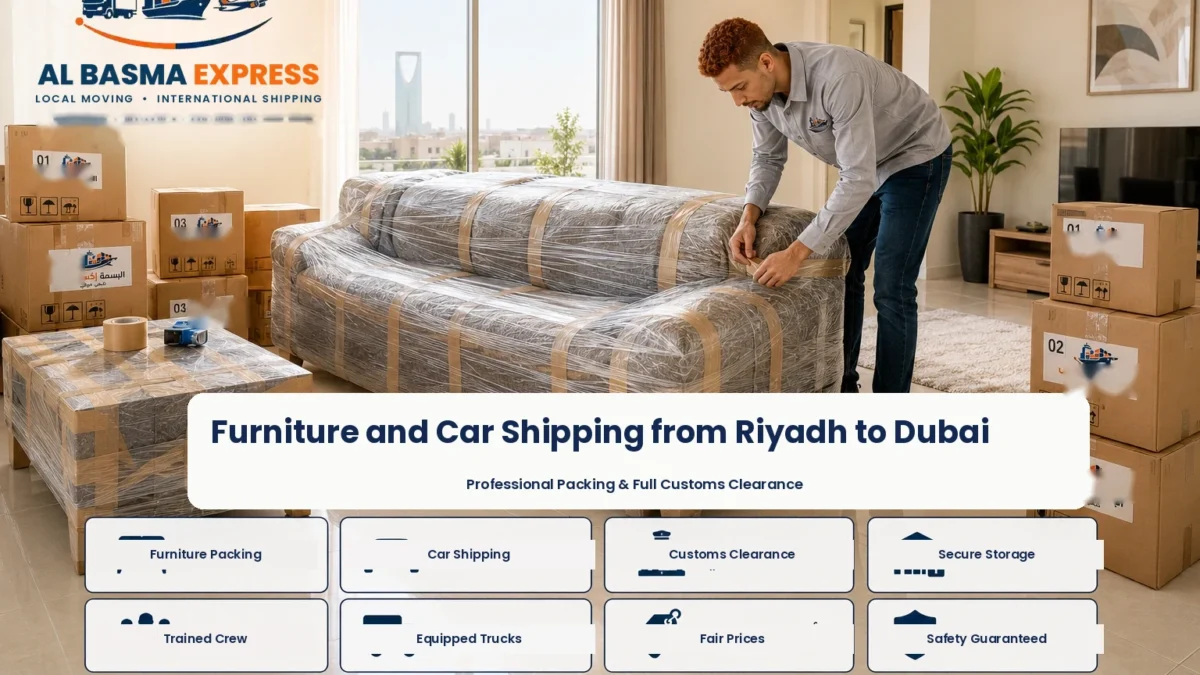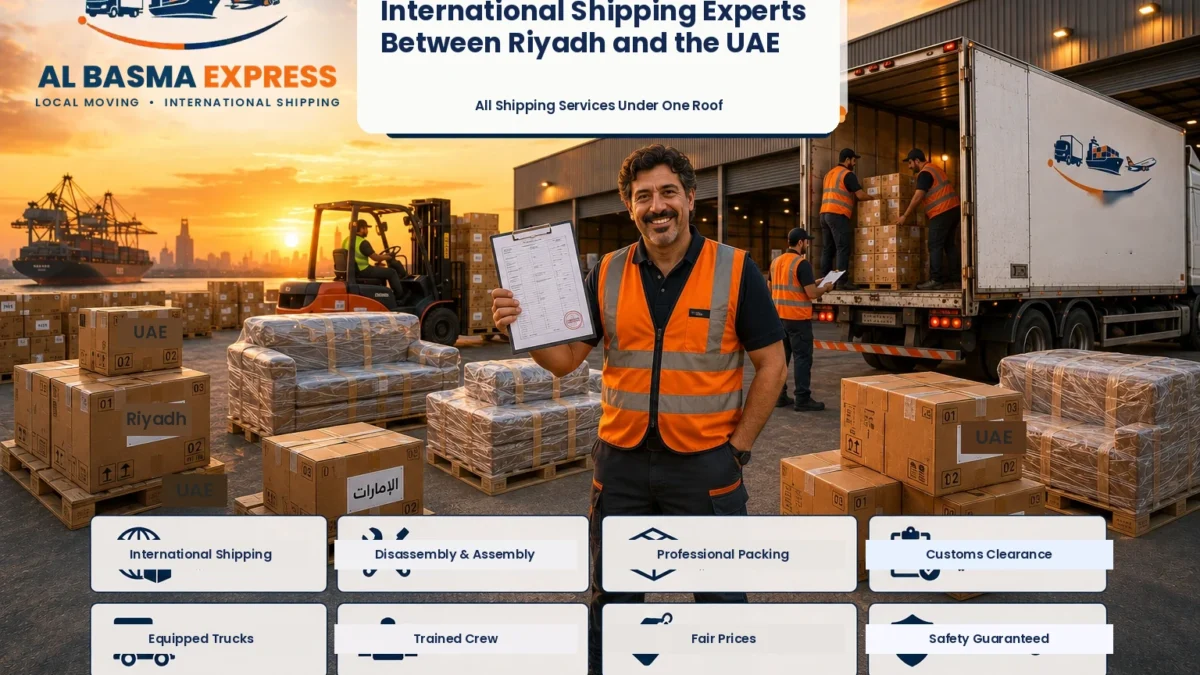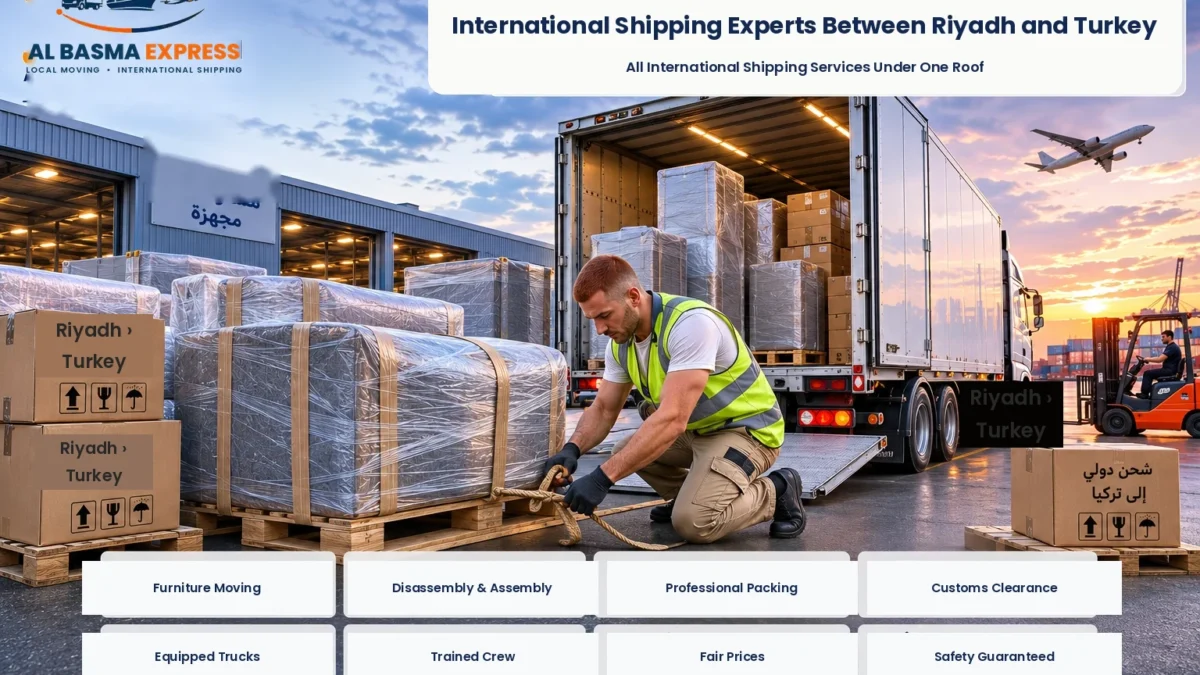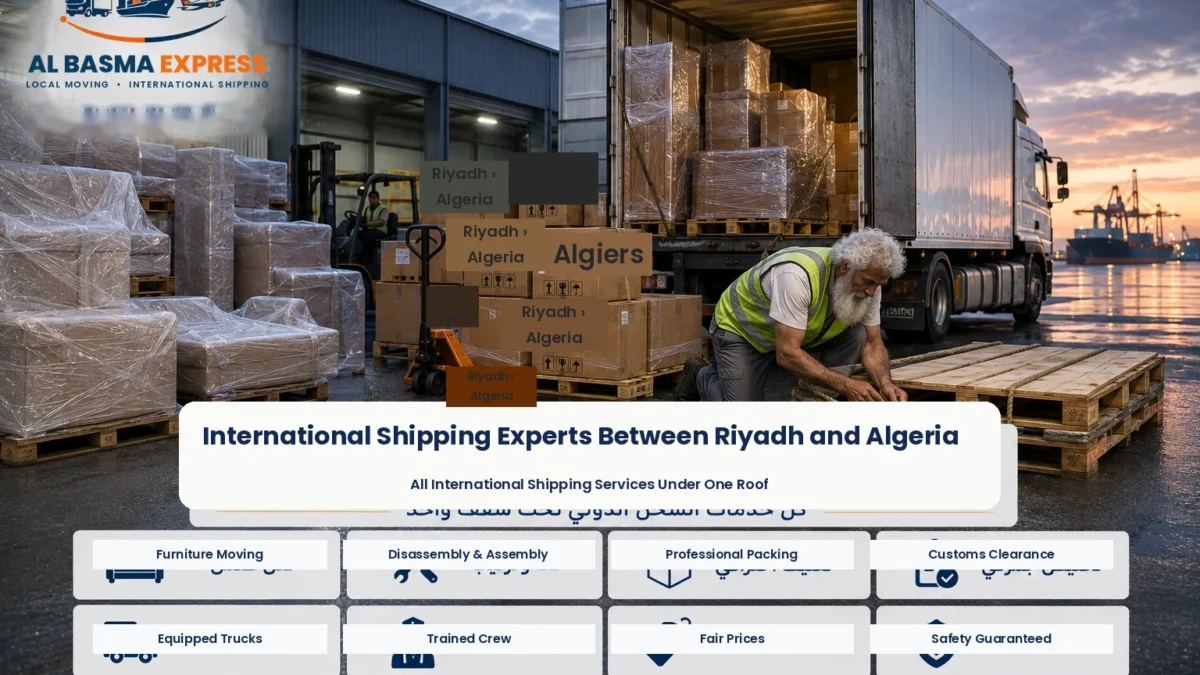

A shipment from Saudi Arabia to Oman can be seen as six successive handover points, not just a truck leaving a Saudi city and stopping outside a home in Muscat. The first is collecting the load as it is inside the home or office; the second is turning it into a transportable shipment through disassembly, packing and inventory; the third is organizing the route and documents; the fourth is crossing the direct land border between the two countries; the fifth is distributing the load inside the Sultanate; and the sixth and last is returning every item to the place planned for it from the start.
Topic map41 topicsShowHide
This perspective matters because orders differ a great deal. One customer may want to move a whole household from Riyadh to Muscat, another to send a car from Dammam to Sohar, a company may need to ship equipment to Duqm, and there may be several urgent parcels heading to Salalah. Using the same plan for these four orders doesn’t give the best result, even though the origin and destination countries are the same.
Al Basma Express operates as a shipping company from Saudi Arabia to Oman for moving furniture, household goods, appliances, cars, goods, equipment and parcels, with pickup from Riyadh, Jeddah, Dammam, Khobar, Al Ahsa, Makkah, Madinah and other Saudi cities, and delivery to Muscat, Salalah, Sohar, Nizwa, Al Buraimi, Ibri, Barka, Sur, Rustaq, Duqm and other areas depending on the consignee’s address and the operating plan.
Land freight between the two countries benefits from the direct road through the Empty Quarter (Rub’ al Khali), which allows trips suited to furniture and larger loads to be organized without building the plan around crossing a third country. Border and load procedures are reviewed before departure according to the type of shipment and the regulations in force at the time, while the final city inside the Sultanate remains a key part of the calculation — entering Oman doesn’t mean the truck has actually reached Muscat, Salalah or Sohar.
Under the Al Basma Express service plan, land freight for suitable services takes 2 to 5 days depending on the pickup city in the Kingdom, the nature of the load, the crossing stage and the destination inside Oman. Air freight for suitable and urgent shipments takes 24 to 48 hours depending on the flight, content acceptance and handling — and the core transport time should be distinguished from the full pickup, preparation and delivery time.
There’s no fixed price for every order: the cost depends on the load’s volume and weight, the pickup city, the Omani governorate or city required, the transport method, the type of packing, the need for disassembly and assembly, storage or lifting, and whether the order includes a car, equipment or goods. That’s why the free survey is a practical way to get a more accurate picture before confirming the service.
Tracking includes GPS for the land stages alongside order status updates, so the customer can follow the shipment from pickup to preparation, then the road, the crossing and distribution. To request a survey or share load details, call +966553923364.

Stop one: turn your belongings into a shipment that can be described before you ask for a vehicle
The difference between a home and a shipment is data. A home naturally contains furniture, appliances, clothes and tools, but a shipment needs to know what’s in it, how many units will be moved, what needs special protection and what must be handled separately.
Start by dividing your belongings into groups rather than just counting rooms. Group one is furniture: beds, wardrobes, tables, living room sets, sofas, desks and shelves. Group two is appliances: fridges, washing machines, TVs, computers and small appliances. Group three is cartons and personal items. Group four is glass, antiques and delicate items. Then the car, equipment and goods get separate files if there are any.
This approach shows where the packing effort will go. A home may be large but have simple furniture that doesn’t need much disassembly, while a smaller apartment may be full of mirrors, glass units and screens that need longer preparation.
This is also the stage to sort out what you won’t need in Oman. Moving a large item to Muscat and then finding it doesn’t suit the new space means the customer has paid to pack, load, ship and unload it for nothing.
Furniture
Identify the items that need disassembly, the glass attached to them and the detachable parts.
Appliances
Record large appliances, TVs and any device that needs securing or a special crate.
Parcels
Divide them into ordinary, fragile, urgent, and those that can be opened later.
Separate items
The car, goods and equipment need separate data and a separate handling plan.
◆ Don’t say “I have a whole house” if you want a more accurate assessment
The number of rooms gives a first impression, but it doesn’t show how much furniture there is, its weight or its sensitivity. It’s better to add a description such as: two bedrooms that need disassembly, a large living room set, three large appliances, two TVs and personal cartons.
This information helps choose protective materials, technicians and space more realistically, and makes the survey faster because it starts from a clear list.
Stop two: the free survey reveals what doesn’t show up on a furniture list
The furniture list tells us what we’ll move, but the survey tells us how we’ll move it. That’s a big difference: a single wooden table can be very easy in a villa with a wide door and difficult in a high-floor apartment with a narrow corridor.
The survey starts with the size of the items and appliances, then moves to each item’s route through the property. Door widths, corridors, stairs, the elevator and the distance from the building entrance to the vehicle parking spot are all checked.
If a wardrobe won’t fit through the door, the need for disassembly is recorded. If there’s a heavy marble piece, we can tell whether it needs extra labor or lifting gear. And if a mirror is large and has no original box, different protective materials are specified.
The survey is also a chance to review things the customer may not have in mind at the first call: storeroom contents, balcony furniture, bicycles, spare appliances and boxes on top of wardrobes.
The destination inside Oman is discussed during the survey as well. An apartment in Muscat isn’t like a warehouse in Sohar, a home in Nizwa or a commercial site in Duqm, so the destination affects the vehicle type, the delivery date and the nature of the final stage.
▪ The survey isn’t for counting items the customer can count themselves
The real value of the survey is finding out what needs a technician, what needs extra protection and whether the site itself calls for a different carrying method or vehicle.
Every problem discovered before shipping day turns from a surprise into a known item that can be prepared for.
Stop three: packing based on “exposure time”, not room names
In this article we think about packing differently from the usual approach. We don’t just talk about packing a bedroom or a living room — we ask: what will happen to the item during the hours and days it stays packed? It will be carried, loaded into the vehicle, moved on the road, maybe wait for a crossing stage, then be lifted again and carried into the property.
An item that can handle one carry within a city may need more care when it goes through multiple stages. So packing starts by protecting its surface, then its edges, then stopping internal or attached parts from moving, then stopping the item itself from moving inside the vehicle.
Wood needs a separating layer that preserves the surface, especially polished and painted wood. Then blankets or protective materials and edge guards are used when needed.
Living room sets and sofas need their fabric protected from dust and friction, with attention to legs and edges. Cushions can be separated and grouped so they don’t get scattered.
TVs and mirrors need pressure kept off the front, reinforced edges and internal padding. Some items may need a more rigid or wooden crate when size or sensitivity calls for it.
Fridges, washing machines and appliances need preparation before wrapping: drying and securing doors, accessories and moving parts come first, then the outer protection.
● The final layer isn’t a wrap — it’s the item’s position in the load
Even the best packing doesn’t work alone if the item is placed under a load it can’t bear or left to move inside the vehicle. That’s why packing is only complete when the loading crew knows where the item goes and how it will be secured.
The sensitivity list becomes part of the vehicle loading plan: glass, appliances and delicate edges get positions that suit their nature rather than whatever space is free.
Stop four: the direct road through the Empty Quarter changes how land freight is planned
A direct land road between the Kingdom and Oman lets land shipments travel on a route that links the two countries directly, but it doesn’t remove the importance of planning the domestic distance before or after the border crossing.
A shipment starting in Jeddah has to cross a large part of the Kingdom before reaching the eastern route to Oman, while the stage is different for a shipment leaving Riyadh, Al Ahsa or Dammam. So the expected time isn’t the same for every Saudi city.
Before reaching the crossing, the load data must be ready and the description of the contents must match their nature. Personal furniture isn’t treated like a company’s goods, a car isn’t part of the household carton list, and equipment needs clear data about its nature.
After entering the Sultanate, another distribution stage begins. If the destination is Muscat, the domestic route differs from heading to Sohar, Nizwa or Salalah. That’s why the city is set before departure — the operations team doesn’t wait until after the border crossing to find out the final location.
Suitable land freight services take 2 to 5 days under the service plan, with the schedule affected by the pickup city, the load, procedures and the destination. The date is reviewed at booking against the order details rather than treated as a fixed number for every trip.
◆ The border is a transition point, not the delivery date
It helps the customer to distinguish between reaching the border, entering the Sultanate, reaching the city and then reaching the home. Each of these is a different stage.
The more precisely the final destination is known, the more useful the updates the consignee can receive, instead of a generic phrase like “the shipment is in Oman”.
Shipping from Riyadh, Jeddah and the Eastern Province to Oman: why the start of the route differs
Saudi Arabia isn’t a single point on the map, so the pickup city is a key element of any shipping quote to the Sultanate. The rest of the service may be similar, but the domestic distance before reaching the crossing varies enough to affect time and operations.
From Riyadh: furniture, goods and cars can be collected from homes, offices and warehouses and prepared for the land route, with the option of separating the household shipment from urgent parcels if the customer needs it.
From Jeddah: the load needs a longer domestic stage, so securing furniture and appliances matters from the start of the trip, not only as it nears the border. It’s also worth assessing whether some small shipments justify air freight instead of going in the main load.
From Dammam, Khobar and Dhahran: the local stage differs because of the Eastern Province’s location, and shipping of furniture, goods, equipment and cars can be organized according to the size of each order.
From Al Ahsa: household and commercial shipments can be arranged once the address, type of load and loading method are set, with special attention to equipment or products that need different handling.
From Makkah and Madinah: the transport stage inside the Kingdom is added to the trip calculation, so the date for an order from Jeddah shouldn’t be compared with a shipment starting from a city closer to the eastern route without considering the starting point.
From Qassim, Hail and other cities: the route is designed around the actual pickup point, including whether local consolidation is needed before moving to the international shipping stage.
Western Saudi Arabia
A longer domestic stage makes securing and preparation from the start an important factor.
Central region
The vehicle and route plan are chosen according to volume and the final destination inside the Sultanate.
Eastern Province
Relative proximity doesn’t remove the shipment’s procedures or the effect of the final Omani city.
Air freight in 24–48 hours: when does it become more than just a faster option?
There’s a difference between wanting a shipment to arrive quickly and actually needing it to arrive quickly. Air freight becomes more valuable when a delay in certain items would disrupt work or essential setup — not simply because the customer wants to use the fastest method for everything in the home.
Suitable air freight services can take 24 to 48 hours depending on flights, content acceptance and handling. In practice it’s used for limited parcels, some non-personal documents, and appliances or items the customer needs within a short time.
Bedrooms, living room sets, large appliances and complete household loads usually have a volume that makes land transport the more logical option in many cases.
In air freight, dimensions are considered alongside weight. A large, light box can take up significant space, so volumetric weight and the type of package are assessed — not just the scale reading.
If a customer is moving to Muscat, for example, they can carry personal essentials with them, send an urgent parcel with some first-days necessities by a suitable method, and move the rest of the home by land. This split avoids upgrading the speed of fifty items for the urgent need of two.
| Criterion | Land | Air |
|---|---|---|
| Suitable service time | 2–5 days | 24–48 hours |
| Best use | Furniture, larger loads and suitable cars | Limited and urgent parcels |
| Planning factor | Space, securing and road | Volumetric weight and content acceptance |
| The right decision | When quantity and volume are the biggest factor | When the value of time is higher |
▪ Don’t ask “which is better?” without adding “for which shipment?”
Land and air freight aren’t competing products where you always have to pick one. Land may be the best solution for the furniture and air the best for a small box in the same order.
That’s why the transport plan is built around the different categories within the order, rather than building the whole order around a single method.
A car to Muscat or Sohar: why the vehicle’s journey starts before its loading day
Shipping a car from Saudi Arabia to Oman can be coordinated with the household move, but the car isn’t treated as just another item on the furniture list. It needs its own data, documents, inspection and securing method.
The first step is recording the vehicle, owner and consignee details, then photographing its exterior condition from different angles. The goal is a clear reference of its condition before transport begins.
Next, personal items unrelated to the vehicle are removed, and the cabin and trunk aren’t used as random storage for household cartons. Mixing household goods with the car’s file makes the inventory, handling and procedures less clear.
Tires, battery and any visible leaks are also checked, and the company must be told if the car doesn’t run or needs a different loading method.
The regulatory and procedural requirements in force at the time are reviewed according to the vehicle’s status, the owner and the purpose of the move. A list of papers remembered from an old experience shouldn’t be relied on — procedures that apply to one case may not apply to another.
On arrival in Muscat, Sohar or other destinations, the visible condition is inspected and compared with the earlier documentation before the delivery is closed.
Goods to Oman: weight isn’t the only number the shipping team needs
In commercial shipping, the team needs to understand how the goods will sit inside the vehicle, not just their total weight. The number of units, the dimensions of each package, stackability and the nature of the contents can change how the whole order is loaded.
Light goods in large boxes may take up more space than heavier, denser goods, while sensitive products may need spaces with nothing placed on top — even if the box looks strong from the outside.
That’s why a commercial customer should provide a list with the item, quantity, weight, dimensions, packing method and any instructions such as “this way up” or “no weight on top”.
If the goods are going to a warehouse in Sohar, for example, the receiving site details, the gate, working hours and the available unloading equipment are also recorded.
If the destination is a shop or facility inside Muscat, the vehicle, timing and unloading method may differ compared with a large industrial warehouse.
The description of the shipment must be real and accurate, with personal belongings kept separate from commercial activity if the order combines both.
◆ Why can two boxes of the same size be completely different logistically?
The first may contain clothes and can go in several positions, while the second contains a device that can’t be turned over or stacked. So dimensions alone don’t determine how a package is handled.
Contents, weight and handling instructions must be part of the package data, especially in commercial and equipment shipping.
Equipment to Duqm, Salalah and industrial areas: start from the lifting point
Equipment differs from ordinary goods because it can combine heavy weight, an irregular shape and sensitivity to certain orientations. So the plan starts with knowing how the piece will be lifted before thinking about where it will be placed.
The individual weight of each piece of equipment must be known, not just the total weight, because handling gear deals with one piece at a time. Dimensions, lifting points, the center of gravity where it matters, and the correct transport orientation are also recorded.
If the equipment is installed at a work site, it must be determined whether parts, fluids or accessories need to be removed before transport, in line with its nature and the instructions of the relevant specialist.
After preparation, it’s decided whether it needs a base, pallet, barriers or extra securing gear. The goal is to stop movement, not just to tie a strap to any available point.
On delivery, the unloading equipment must be ready. There’s no point sending equipment that needs a crane to a site with no way to unload it and none arranged in advance.
That’s why a commercial customer is asked to specify the type of arrival site — a warehouse, factory, workshop, project or other location — along with the handling capabilities available.
Muscat isn’t all of Oman: the final destination can reshape the last part of the trip
One of the key differences in shipping to Oman is that distribution doesn’t stop at one city. There are customers in the capital, others in North Al Batinah, inland destinations, cities in the south, and industrial and commercial areas.
Muscat: one of the main destinations for residential furniture, offices and parcels. The wilayat, area and property must be specified, because delivering to a villa differs from a tower, an office or a warehouse.
Sohar: household and commercial shipments and equipment can be organized to the city and its surroundings, specifying whether the consignee is a home or an industrial site.
Nizwa: the domestic delivery stage is included in the trip timing, and coordination follows the location of the home or facility.
Salalah: this southern destination needs the domestic distance built into the plan from the start, and the shipment entering the Sultanate isn’t treated as arriving in Salalah.
Al Buraimi: furniture, parcels and goods can be arranged according to the delivery address and the nature of the load.
Ibri: the domestic stage is set according to the consignee’s location and how easily the vehicle can reach the property.
Sur: delivery of furniture, parcels and commercial shipments can be organized according to the distribution route and final address.
Barka and Rustaq: the area and property details factor into the unloading appointment and the services the consignee needs.
Duqm: can be an important destination for equipment, goods and projects, so coordinating the type of site and handling equipment becomes more important than just knowing the city’s name.
Homes
- Floor and entrance.
- Truck parking.
- Assembly service.
Warehouses
- The gate.
- Receiving hours.
- Unloading equipment.
Projects
- Work site location.
- Receiving officer.
- Lifting equipment.
◆ Write the wilayat and area before asking for a delivery date
The name “Muscat” or “Salalah” alone gives a general direction, but it doesn’t show the distance to the property, the type of entrance or whether the vehicle can get there directly.
Sending the exact location and consignee details early means the final date is based on the real destination, not just the city center.
GPS tracking: let tracking tell you the next step, not just the current location
There’s a difference between tracking the truck and tracking the shipping process. Seeing the vehicle on the road is useful, but on its own it doesn’t answer the question that usually matters to the customer: what happens next?
That’s why GPS tracking for the land stages is combined with order status updates. The status starts with shipment collection, then preparation, loading complete, trip started, reaching the crossing stage, entering Oman, moving to the final city, and finally out for delivery.
This breakdown lets the customer get ready. While the shipment is still on the road inside Saudi Arabia there’s no need to prepare the elevator in Muscat, and once it moves to final distribution it makes sense to confirm the consignee is available and the entrance is ready.
In commercial shipping, status updates let the warehouse prepare staff, a forklift or unloading space instead of the vehicle arriving unannounced.
The system is most useful when the order has more than one component, such as furniture and a car. Each category may be at a different stage, so one update shouldn’t be assumed to describe every part of the order if they move under separate arrangements.
▪ Tracking that helps you make a decision is more useful than tracking that just keeps you watching the map
The goal is to know when to get ready to receive the shipment and when to expect the next stage — not to follow the vehicle’s movement every minute.
That’s why the order status complements and explains the location, especially at the border or during operational stops.
How is the price set? Use the formula “load + route + service + site”
We don’t need to publish generic numbers for the customer to understand why the price of shipping from Saudi Arabia to Oman differs from order to order. The idea can be summed up in four parts: what will be moved, from where to where, what services are needed, and how difficult the pickup and delivery sites are.
The load: includes volume, weight, type and sensitivity. A whole home is bigger than a few parcels, and heavy equipment needs different handling from a carton of clothes.
The route: the origin and destination cities are key. Pickup from Jeddah to Muscat differs from Dammam to Al Buraimi, and Salalah needs a different domestic stage from Sohar.
The service: does the customer want transport only, or packing, disassembly and assembly too? Is there a car? Storage? Equipment that needs lifting? Every service widens the scope of work.
The site: the floor, elevator, vehicle parking and the carrying distance affect time and labor. The same applies at the destination.
The shipping method matters too. An urgent air parcel works on a different model from a furniture truck traveling by land, and the two can’t be compared on weight alone.
| Group | Factors | How does the customer get a more accurate assessment? |
|---|---|---|
| Load | Volume, weight, sensitivity, type | Photos or a survey and a contents list |
| Route | Origin city and destination | Sending both addresses precisely |
| Service | Packing, disassembly, assembly, storage, lifting | Defining what’s needed before the quote |
| Site | Floor, elevator, entrance, parking | Explaining the property conditions at both ends |
★ Don’t compare three quotes as three numbers — compare three service scopes
Ask: does the quote include packing? Is there a disassembly and assembly service? Is delivery to the final address or to another point? Does the car or equipment have a separate cost?
Once the items are aligned, comparing prices becomes meaningful — while comparing two numbers for two different services can give the wrong impression.
Temporary storage: when the shipping date comes before the home handover date
Your lease in Saudi Arabia may end before the property in Muscat is ready, a company may move its office furniture before the new premises are complete, or the customer may have to travel while the shipment waits for a suitable delivery date. In these cases temporary storage becomes part of the trip plan.
The need for storage should be mentioned before packing if possible, because items will stay sealed for an extra period, so appliances, upholstery and cartons need to be prepared accordingly.
The inventory system must also stay in place inside storage. Bed screws aren’t separated from their parts, and one room’s cartons don’t move into another room’s group without updating the organization.
It’s best to know which things the customer may need before others. If a group may leave storage first, it shouldn’t be placed behind heavy furniture in a way that means moving the whole load to reach it.
When the delivery address is ready, the units are checked before leaving storage and then loaded according to the final distribution plan.
The day before shipping: a different checklist that doesn’t start with cartons
On the day before the move, the customer shouldn’t still be deciding what gets shipped. It’s better for the load scope to be settled already, and for the last day to be used to check the things that aren’t part of the moving company’s job.
Gather original documents, passports, money, jewelry, medicines and everyday devices in a bag that stays with you. Don’t put these in a box labeled “important” — the word “important” doesn’t stop it going on the truck.
Check the fridge, washing machine and appliances that need emptying or drying, and make sure clothes and personal items inside wardrobes have been taken out before disassembly starts.
Photograph the connections of complex electronics, and gather cables and accessories so they’re linked to each device, instead of putting all the wires in one box.
Check with building management or the guard if using the elevator or letting the moving vehicle in needs coordination, and clear anything that blocks the crew’s movement in the corridors.
Finally, confirm the consignee’s details in Oman: name, phone number, city, area, location, floor and any special entry instructions. On the day before, these details matter more than writing more words on boxes.
◆ Create a “do not ship” zone inside the home
Put suitcases, documents and the things you’ll take with you in a clear, separate place, instead of spreading them between rooms with small labels that could be misunderstood.
Physical separation is simpler and clearer than relying on memory on a day when lots of workers and items are moving at the same time.

Stop six: how do you receive the shipment without turning your new home into a storeroom?
Arrival isn’t the moment to lose the system built from the start. That’s why the best unloading is an extension of the inventory and labeling, not just a quick drop of everything into the nearest empty space.
The process starts by checking units as they come off the vehicle. The main numbers are matched, and furniture and sensitive appliances that can be assessed directly are inspected.
Then the large furniture goes to its position first, because moving a wardrobe or bed gets harder once the room fills up with cartons.
If the service includes assembly, the final position is set before the technician starts. An item shouldn’t be assembled in a temporary spot just because there’s working space, and then moved while assembled.
Then the cartons go to the rooms written on them. This is when writing the room name on each package pays off: the kitchen box goes straight to the kitchen instead of spending a day in the living room first.
Finally, only the priority boxes are opened: essentials for sleeping, the kitchen, clothes and everyday items. Books, décor and non-urgent contents can be opened gradually.
▪ The delivery rule: big items first, essentials second, the rest in good time
Set the positions of large furniture and assemble it, then open what you actually need on day one. There’s no benefit in opening dozens of boxes at once if the inventory tells you what’s in them.
This approach lets parts of the home be used quickly, even if arranging the rest takes several days.
Why Al Basma Express for shipping between Saudi Arabia and Oman?
The main advantage a customer needs on an international trip isn’t a longer list of services in an ad, but the ability to connect those services in a practical way. The survey must be reflected in the packing, the packing must suit the loading, the inventory must continue through delivery, and tracking must help the consignee get ready.
Al Basma Express provides solutions for home and office furniture, cars, goods, equipment and parcels, with pickup from many Saudi cities and delivery to various cities and wilayats inside Oman.
The service includes a free survey to define the volume and services, packing according to the contents, disassembly and assembly for suitable furniture as agreed, and organized inventory, loading and tracking.
Suitable land freight services take 2 to 5 days depending on the actual trip, and suitable air freight takes 24 to 48 hours for shipments that need more speed.
GPS tracking supports the land stages, with order status updates as the shipment moves from the pickup city to the international route, then into the Sultanate and on to distribution.
The price is set according to volume, weight, type of load, route, city, packing, disassembly and assembly, and the services required — without imposing one price on shipments that are fundamentally different.
Delivery can be organized to Muscat, Salalah, Sohar, Nizwa, Al Buraimi, Ibri, Sur, Barka, Rustaq, Duqm and more, depending on the address and the nature of the order.
To arrange a survey or send your shipment details, call +966553923364 or visit the official Al Basma Express website.
Frequently asked questions about shipping from Saudi Arabia to Oman
How long does land freight from Saudi Arabia to Oman take?
Suitable land freight services take 2 to 5 days depending on the pickup city in the Kingdom, the type of load, the crossing stage and the city or wilayat required inside Oman, and the expected date is confirmed against the actual order details.
How long does air freight to Oman take?
Air freight for suitable shipments takes 24 to 48 hours depending on the flight, content acceptance and handling stages, and pickup, preparation and final delivery may need extra time depending on the service.
Is there a direct land road between Saudi Arabia and Oman?
There’s a direct land link between the two countries through the Empty Quarter, used for vehicle traffic and shipping, with the trip organized according to the origin city, the load and the procedures in force at the time.
Does Al Basma Express offer a free survey before shipping?
Yes. The free survey helps determine the load volume, the furniture that needs disassembly, the packing level, the difficulty of the pickup site and any extra services — and then a quote that better suits the order is built.
Can a whole household be shipped from Riyadh or Jeddah to Muscat?
Household furniture can be moved from various Saudi cities to Muscat and other Omani cities, with disassembly, packing, inventory, loading, unloading and assembly services according to the agreed service scope.
Can a car be shipped to Oman along with the furniture?
The car and furniture can be coordinated within the customer’s order, but the car has its own file in terms of data, inspection, documentation, transport method and documents, while the furniture is managed with its own separate inventory and packing.
What are the best furniture packing materials for shipping to Oman?
It depends on the item: protective blankets, bubble wrap, reinforced cartons, corner guards, padding and outer wrapping can be used, with more rigid or wooden crates for items that need them.
Can the shipment be tracked by GPS?
GPS tracking helps follow the land stages of the trip, with order status updates during pickup, preparation, the road, the crossing, entry into the Sultanate and distribution to the consignee.
How is the price of shipping from Saudi Arabia to Oman determined?
The price depends on the pickup city, the Omani destination, the volume, weight and type of load, the transport method, the packing level, disassembly, assembly, storage and lifting services, and how difficult the property is to reach.
Can goods and equipment be shipped to Sohar or Duqm?
Shipping goods and equipment can be assessed once the item, quantity, weight, dimensions, handling method, lifting points and consignee address are known — then the right vehicle, packing and arrangement are chosen for the order.
Does the service reach Salalah, Nizwa and Al Buraimi?
Delivery can be organized to Muscat, Salalah, Sohar, Nizwa, Al Buraimi, Ibri, Barka, Sur, Rustaq, Duqm and other areas depending on the operating route, the final address and the nature of the load.
How do I request shipping to Oman?
Contact Al Basma Express on +966553923364 and send your pickup city in Saudi Arabia, the city or wilayat required in Oman and the type of load — then a free survey is arranged and the right shipping plan is set.
One trip — but its success depends on six stops working together
Shipping from Saudi Arabia to Oman doesn’t need to be complicated if it’s broken down correctly. The process starts with knowing what will be moved, then assessing the site, protecting the load, preparing it for the land or air route, following the crossing, and finally organizing delivery within the required wilayat or city.
If the order is furniture, the focus is on disassembly, packing and inventory. If it’s a car, the plan starts with documentation, papers and the loading method. If it’s goods, the item, quantity, weight and dimensions become essential. And if it’s equipment, the process starts with lifting points and securing.
Al Basma Express offers suitable land freight in 2 to 5 days and suitable air freight in 24 to 48 hours, with a free survey, multi-level packing, GPS tracking for the land stages, and solutions for furniture, cars, goods, equipment and parcels.
Whether your destination is Muscat, Sohar, Nizwa, Salalah, Al Buraimi, Duqm or elsewhere, defining the address and the nature of the load early lets the arrival stage be planned before the shipment leaves the Kingdom.
Get started by calling +966553923364 and sending your pickup city, destination and shipment contents — then move on to the survey and the right plan, instead of starting from a general question about truck size or a price that doesn’t know your load.